NEW YORK, March 26, 2026 (GLOBE NEWSWIRE) — LockedIn AI has seen a surge of early-career candidates turning to real-time interview assistance — not as a shortcut, but as a survival strategy in a job market that has left them with almost no margin for error.
The class of 2025 watched their older siblings get hired at Meta, Amazon, and Google — only to be shown the door months later. They saw 245,000 tech workers lose their jobs in 2025 and another 59,000 in just the first three months of 2026.
And then they graduated into the worst entry-level job market in five years. They didn’t just enter the workforce cautiously. They entered it armed — with AI.
A Generation That Learned Fear Before They Learned Excel
The numbers tell a brutal story. According to the Federal Reserve Bank of New York, unemployment among recent college graduates aged 22 to 27 climbed to 5.7% by late 2025, well above the 4.2% national rate. Underemployment hit 42.5% — its highest level since 2020.
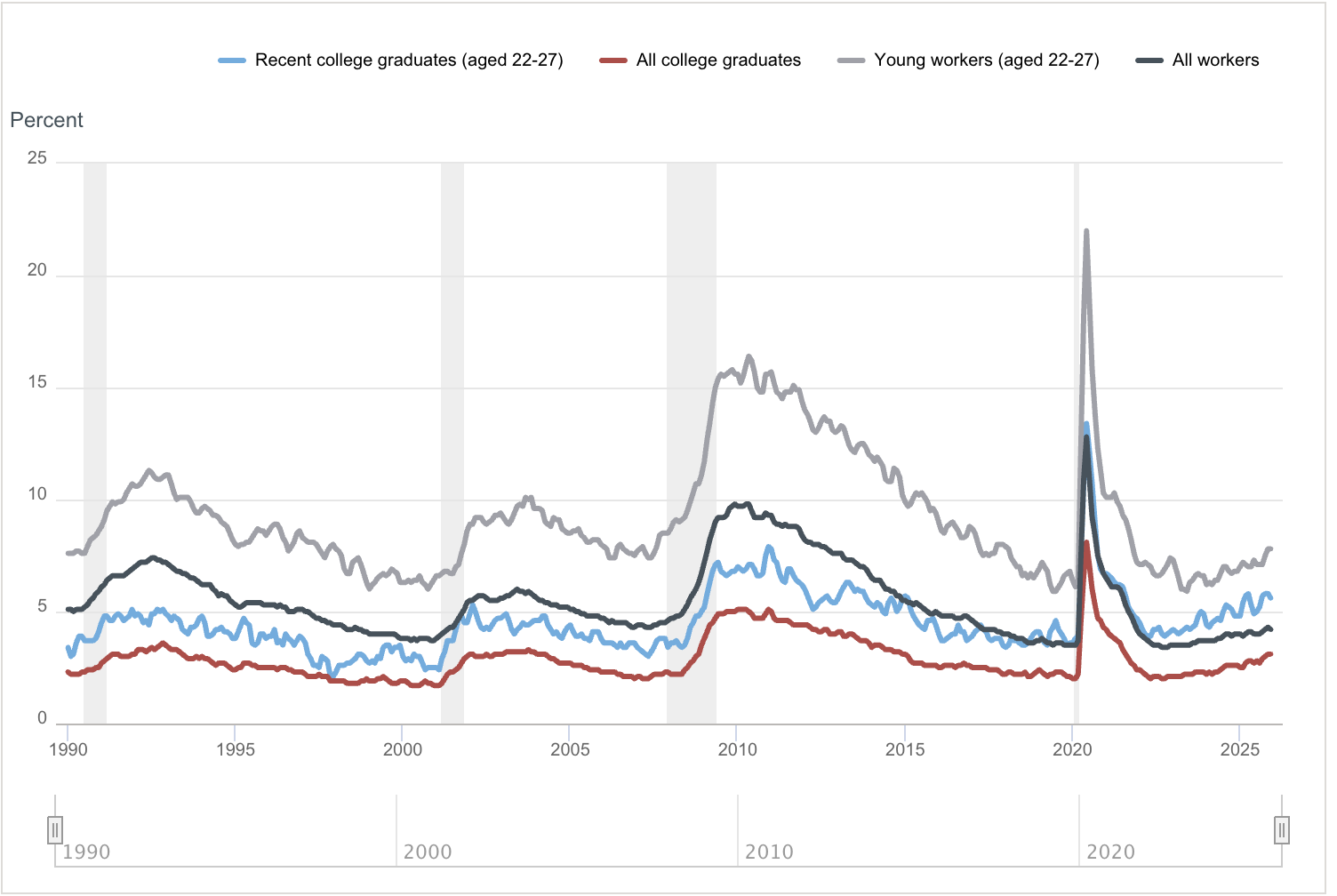
More people chasing fewer jobs, with less experience to stand out. This isn’t a blip. It’s a structural shift. And the Class of 2025 knows it.
After watching an entire generation of experienced professionals get laid off despite doing everything right, they decided they weren’t going to face the job market alone.
From Career Advice to Interview Copilot
The adoption started quietly. Gen Z workers started to use AI to figure out how to communicate with a boss or colleague or, if unemployed, they use AI to create a resume and practice interview questions.
But for the Class of 2025 it isn’t enough. They’ve seen how brutal the funnel has become. The average job posting now attracts 340 applicants, and only about 2% get invited to interview. When you finally get that one shot after dozens of applications, the stakes feel enormous. This generation isn’t willing to take it alone.
That’s where tools like LockedIn DUO come in — combining real-time AI assistance with live human expertise during the interview itself. Think of it less as “cheating” and more as what this generation considers common sense: if AI is eliminating your job prospects, AI should also help you land the jobs that remain.
The Double Standard That Fuels the Movement
There’s an irony that hasn’t been lost on young job seekers. The same companies cutting thousands of roles in the name of AI efficiency are the ones banning AI use in interviews.
Google has publicly acknowledged that a significant portion of its codebase now includes AI-generated code. Amazon, Microsoft, and Meta all encourage engineers to use AI tools daily. Yet during interviews, those same tools are treated as disqualifying offenses.
For the Class of 2025, this isn’t just inconsistent. It’s absurd. They’ve been trained on AI since freshman year. Their professors told them to learn it. LinkedIn told them to list it. Employers told them it’s the future. And now, in the one conversation that determines whether they can pay rent, they’re expected to pretend AI doesn’t exist.
“Don’t Hate the Player, Hate the Game”
Some will argue that using AI in an interview is dishonest. But the Class of 2025 would push back: the entire system is already mediated by AI.
Companies use applicant tracking systems powered by AI. Resumes are rejected without a human ever seeing them. The hiring pipeline has been automated from end to end – except for the candidate’s side.
Using AI in interviews isn’t gaming the system. From this generation’s perspective, it’s achieving parity.
And the tools themselves are evolving beyond simple answer generators. LockedIn DUO, for example, pairs AI-powered transcription and contextual processing with a real human mentor who can see the candidate’s screen, hear the interview, and provide strategic guidance in real time. It’s not replacing the candidate’s knowledge – it’s amplifying their ability to communicate under pressure.
For a generation where 93% report interview anxiety the value proposition is obvious. It’s not about getting answers you don’t know. It’s about performing at your actual level, rather than a diminished one driven by nerves.
The New Normal Is Already Here
More than half of employers surveyed by NACE now rate the job market for new graduates as “poor” or “fair” — the most pessimistic outlook since the pandemic. The Class of 2025 started their job search 6 months before graduation, earlier than any previous class.
They did everything “right.” And the market still tightened around them.
So they’ve made a calculation that would have seemed radical five years ago but feels inevitable today: if every other part of the hiring process runs on AI, the interview should too.
The Class of 2025 didn’t choose this landscape. They inherited a job market reshaped by pandemic overhiring, aggressive cost-cutting, and an AI revolution that’s simultaneously creating and destroying opportunity. They watched a generation of experienced professionals get laid off and concluded that loyalty and competence alone aren’t enough.
Their response isn’t rebellion. It’s adaptation.
And if the hiring world doesn’t adapt alongside them, the gap between how companies recruit and how candidates prepare will only keep growing — until the interview, as we know it, becomes something else entirely.
Press Contact:
A graph accompanying this release is available at https://www.globenewswire.com/NewsRoom/AttachmentNg/1a79314a-6543-45e8-b8e5-ad00e3862894

