
Scissortail Landscaping Explains When Drainage Fixes Are Worth Cost and Which Signs Point to Foundation Risk
Tuttle, United States – January 30, 2026 / Scissortail Landscaping /
Property owners face a critical decision when water pools near their home after storms. Waiting to address drainage problems saves money initially but increases the likelihood of foundation cracks, basement seepage, and structural settling that cost significantly more to repair. A new resource from Scissortail Landscaping helps homeowners evaluate when current drainage patterns justify intervention and which solutions address specific site conditions throughout central Oklahoma.
The guide examines how red clay soil affects water movement, why proper grading matters more than many property owners realize, and how French drains and dry creek beds function differently to manage water flow. Readers can review the complete analysis in the article about drainage solutions to prevent water damage.
Recognizing Warning Signs Beyond Obvious Standing Water
Most homeowners notice when water pools visibly in their yard for days after rain, but less obvious drainage issues often cause more serious damage over time. Water that flows toward foundation walls rather than away from the structure creates constant pressure against basement walls and footings. During Oklahoma’s wet seasons, this pressure can force water through microscopic cracks in concrete, gradually widening them and allowing more intrusion.
Soil saturation near foundations also contributes to differential settling. When one section of a foundation sits in consistently wet soil while another stays relatively dry, the home settles unevenly. This creates stress that manifests as cracks in walls, doors that suddenly stick or won’t latch properly, and gaps where walls meet ceilings. By the time these interior symptoms appear, foundation movement has typically progressed beyond simple drainage corrections.
Red clay soil throughout the Norman and Oklahoma City metro compounds these problems. Clay expands dramatically when saturated and contracts as it dries, creating a cycle of movement that stresses foundations year-round. Properties with inadequate drainage experience more extreme wet-dry cycles because water doesn’t move away from structures efficiently. This acceleration of expansion and contraction increases foundation stress compared to properties where water drains properly.
Erosion patterns provide another indicator of drainage problems. Channels carved into soil, exposed tree roots, or mulch washing away from planting beds all demonstrate that water flows with enough volume and velocity to move material. That same force undermines foundations gradually, washing away supporting soil and creating voids where settling becomes inevitable.
How Drainage Decisions Affect Project Sequencing and Outcomes
Addressing drainage before installing patios, walkways, or retaining walls prevents having to rework those features later. When hardscaping gets installed on properties with unresolved drainage issues, water often finds new paths that undermine the new construction. A patio poured without proper drainage planning might channel water directly toward the foundation it was meant to enhance.
Retaining walls built without considering water management behind the wall face particular risks. Hydrostatic pressure from saturated soil can push walls outward, causing bulging, cracking, or complete failure. Proper drainage solutions include weep holes, gravel backfill, and sometimes French drains behind retaining walls to relieve this pressure. Properties that need retaining walls almost always benefit from comprehensive drainage evaluation first.
Landscape design choices also depend on drainage patterns. Planting beds located where water naturally collects require different plant selections than well-drained areas. Attempting to grow plants unsuited to wet conditions leads to replacement costs and ongoing frustration. Understanding existing drainage before finalizing landscape plans allows for realistic plant placement and reduces maintenance problems.
Timing matters because drainage corrections often require excavation that disturbs existing landscaping. Addressing these issues before investing in mature plantings, decorative borders, or flower bed installations protects those investments. Property owners who install expensive landscape features first and then discover drainage problems face difficult choices about whether to damage recent work or accept ongoing water issues.
The decision also affects foundation repair costs if problems progress. Foundation specialists frequently require drainage correction before they’ll warranty foundation repairs, recognizing that fixing cracks without addressing the water causing them just creates temporary solutions. Homeowners who delay drainage work may eventually pay for both foundation repair and the drainage solutions they postponed.
Evaluating Site Conditions to Match Solutions with Problems
Scissortail Landscaping approaches drainage evaluation by identifying where water enters a property, how it moves across the landscape, and where it exits or accumulates. This assessment reveals whether simple grading adjustments will redirect flow or whether subsurface solutions like French drains become necessary for effective water management.
French drains work well when water needs to move through areas where surface drainage isn’t practical, such as alongside foundations or through planting beds where visible channels would be unacceptable. These subsurface systems collect water through perforated pipe surrounded by gravel and direct it away from structures to appropriate discharge points.
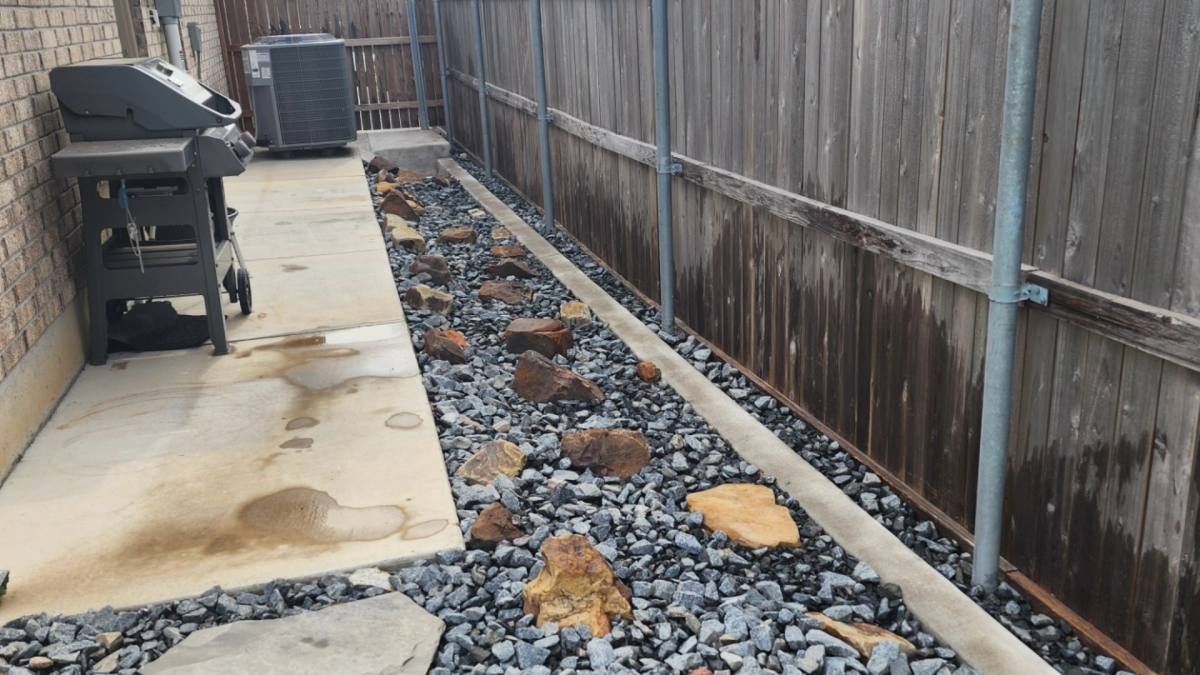
Dry creek beds provide visible, naturalistic drainage channels that handle larger water volumes during storms while adding aesthetic value to landscapes. These features work particularly well on properties with significant slope where water naturally wants to flow across the surface. Properly designed dry creek beds prevent erosion while creating attractive landscape elements.
Properties throughout the Norman area often require combinations of solutions rather than single approaches. A comprehensive drainage plan might include regrading near the foundation, a French drain along one side of the house, and a dry creek bed to manage runoff from the back yard.
Supporting Property Owners Through Complex Decisions
Clear explanation of what different drainage solutions accomplish helps property owners understand why particular approaches suit their specific situations. Some homeowners initially resist subsurface solutions because they can’t see the installed system working, preferring visible improvements. Understanding that French drains prevent foundation damage that costs thousands to repair often shifts this perspective.
Discussion of realistic timelines and sequencing helps property owners plan improvements logically. This locally based landscaping provider recognizes that drainage work often represents the foundation for other outdoor investments rather than a standalone project. Coordinating drainage improvements with planned hardscaping or landscape design creates better long-term outcomes.
Responsiveness to concerns about disruption, cost, and effectiveness builds confidence in proceeding with necessary work rather than continuing to postpone it. Property owners appreciate honest assessment of whether their situation requires immediate action or can wait for more convenient timing without significant additional risk.
Understanding Risks That Escalate With Continued Delay
Foundation damage rarely announces itself dramatically. Instead, problems develop gradually as water continues following the same paths, year after year, creating cumulative stress that eventually exceeds the structure’s tolerance. Property owners who address drainage when early warning signs appear avoid the exponentially higher costs of foundation repair, basement waterproofing, and structural correction that become necessary once damage progresses.
The decision to invest in drainage solutions essentially weighs known current costs against uncertain future expenses that historically prove much larger. Homeowners throughout the Norman and Oklahoma City metro who prioritize foundation protection through proper drainage planning protect both their largest financial investment and their long-term peace of mind. Those interested in site evaluation or discussing specific property conditions can reach Scissortail Landscaping at 405-993-5253.

Contact Information:
Scissortail Landscaping
833 County St 2917
Tuttle, OK 73089
United States
Contact Scissortail Landscaping
(405) 993-5253
https://scissortailokc.com/


Original Source: https://scissortailokc.com/media-room/
